The key tasks to be fulfilled
Scientific and research experiments in data transfer;
Acquisition of data on the Earth using remote sensing techniques;
Optimization of spacecraft control techniques..
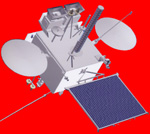
ELEKTRO geostationary hydrometeorological spacecraft is designed for operational imaging of cloud cover and the Earth’s underlying surface, heliogeophysical measurements, hydrometeorological and housekeeping data collection and relaying.
The CORONAS is the Russian program for studying the solar physics and solar-terrestrial relation using a series of spacecraft that provides for three solar-oriented spacecraft to be placed on near-earth orbit. The CORONAS-PHOTON is the third spacecraft of this series. Two previous missions of the Program are CORONAS-I (launched on 2 March 1994) and CORONAS-F (launched on 31 July 2001)..
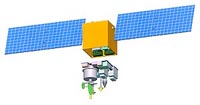
The METEOR-M №1 is designed for global observation of atmosphere and the Earth’s underlying surface enabling hydrometeorological and heliogeophysical data to be acquired on a regular and global basis.
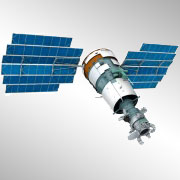
METEOR-3M1 is a multi-mission spacecraft designed for natural resources study, the environmental monitoring and hydrometeorological and heliogeophysical support.
The SICH-1M is a multi-purpose spacecraft designed for the Earth’s surface observation from space in visible, middle IR, and radio regions to the benefit of economy activity and scientific experiments on ionosphere and magnetosphere study.
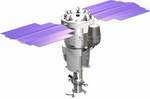
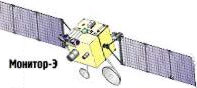
MONITOR-E spacecraft is designed for acquiring operational remote sensing data to the benefit of environmental monitoring, emergency monitoring, natural resources research, cartography, and economical activity.